
Finanalyz

Hyderabad info@finanalyz.com

Address Parsing API Simplify Address Data Processing with the Address Parsing API

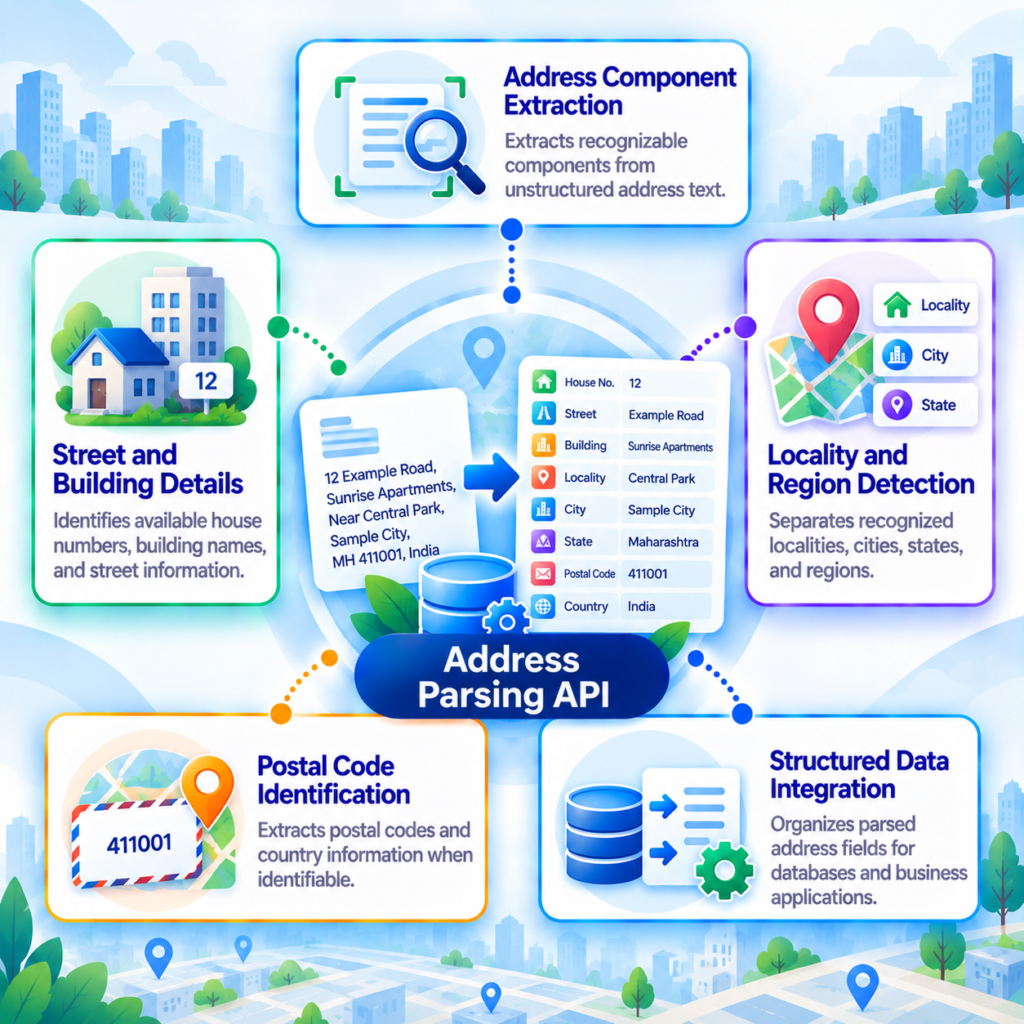
The Address Parsing API helps businesses extract and organize address components from unstructured text into structured fields, such as house number, street, locality, city, state, and postal code. It improves address data consistency and supports customer onboarding, KYC, delivery management, database organization, and address validation workflows.


End-to-End Flow

1

Submit Address Information

2

Validate the Input

3

Analyze the Address Text

4

Identify Address Components

5

Organize the Components

6

Handle Missing or Unrecognized Details

7

Return Structured Data

8

Integrate the Results

Key Capabilities

Address Component Extraction

Separate a full address into recognizable components, such as building number, street, locality, city, state, postal code, and country.

Unstructured Address Processing

Process address text that has been entered as a single string, where supported by the API.

Structured Data Output

Organize extracted information into individual fields to simplify integration with databases and applications.

Address Field Identification

Identify available address elements and assign them to the appropriate fields according to the parser’s supported rules.

Data Preparation for Address Matching

Prepare address information in a consistent structure that can be used by address comparison and duplicate detection workflows.

Missing Component Handling

Help downstream systems identify address fields that are absent or could not be parsed when such information is available in the response.

Database Integration Support

Make address records easier to map to structured database columns and customer profile fields.

API-Based Integration

Connect address parsing functionality to websites, mobile applications, CRM platforms, onboarding systems, and other supported applications.

Use Cases

Customer Onboarding

Convert addresses entered in registration forms into structured fields that can be stored and processed consistently.

data_aggregation

E-Commerce and Delivery

Separate customer address details into usable fields to support order management, shipping forms, and delivery data processing.

categorization

CRM and Customer Database Management

Standardize the structure of address records imported from different sources, making them easier to search, filter, and maintain.

Developer Experience

Secure REST APIs with intelligent address parsing and structured JSON responses for seamless data extraction and address management.

The Address Parsing API can be integrated into applications that need to extract and organize address information. Developers should consult the official FinAnalyz API specification for the actual endpoint, authentication method, supported address formats, required fields, and response structure.

Integration Highlights

API-Based Processing: Submit address information from an application or backend service.

Structured Output: Receive parsed address components in the response format supported by the API.

Database Mapping: Map returned fields to corresponding database columns or application properties.

Workflow Automation: Use parsed address information in onboarding, data-cleaning, and record-management processes.

Error Handling: Handle invalid inputs, incomplete addresses, and parsing failures according to the documented API behavior.

Secure Data Handling: Protect API credentials and personal address information through appropriate access controls and data protection practices.

Suggested Input JSON

The following is an illustrative example only. It is not a confirmed production request schema.

{
  "address": "<FULL_ADDRESS_TEXT>"
}

Suggested Output JSON

The following is a conceptual example showing how parsed address components could be represented. Actual response fields depend on the deployed API specification.

{
  "success": true,
  "parsed_address": {
    "building_number": "<BUILDING_NUMBER>",
    "street": "<STREET_NAME>",
    "locality": "<LOCALITY>",
    "city": "<CITY>",
    "state": "<STATE>",
    "postal_code": "<POSTAL_CODE>",
    "country": "<COUNTRY>"
  },
  "message": "Address parsing completed"
}

Important Integration Note: The example field names and response structure are illustrative, not guaranteed FinAnalyz API fields. Address parsing extracts information from text; it does not automatically establish that the address exists, is deliverable, or belongs to a particular person. Confirm supported countries, language handling, input formats, and production schemas before implementation.

Frequently Asked Questions

What is an Address Parsing API?

An Address Parsing API processes address text and separates it into individual components, such as street, city, state, postal code, and country, when those details can be identified.

The API analyzes submitted address information, identifies recognizable address elements, and organizes them into structured fields according to its parsing rules.

Depending on the address format and API capabilities, components may include building number, street name, apartment or unit, locality, city, state, postal code, and country.

Address parsing separates address text into structured components. Address verification checks address information against validation rules or available reference data. Parsing alone does not confirm that an address is valid or exists.

A parser that supports unstructured address input can process a complete address string and extract recognizable components. Supported formats and languages depend on the implementation.

Yes. Structured address fields can make records easier to organize, search, compare, and maintain. The quality of the output depends on the completeness of the input and the parser's capabilities.

Still have any question? Please contact our sales team