
- November 27, 2026
- Posted by: Finanalyz
- Categories: AML Compliance APIs, Identity Verification APIs, KYC Verification, Risk Assessment APIs
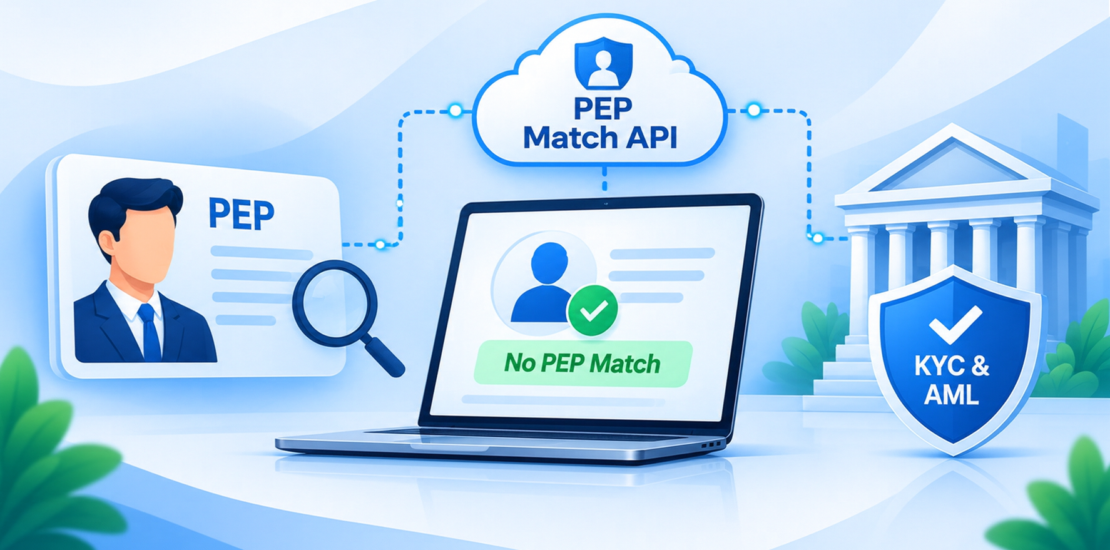
In today’s digital financial ecosystem, identity verification goes beyond checking basic personal details. Financial institutions, banks, NBFCs, insurance companies and other businesses must also understand the potential risks associated with the individuals they onboard. One important aspect of this process is identifying Politically Exposed Persons (PEPs).
A PEP Match API helps businesses identify individuals who hold or have held prominent public positions, enabling more informed risk assessment and compliance screening.
What Is a Politically Exposed Person (PEP)?
A Politically Exposed Person (PEP) is an individual who holds, or has held, a prominent public position and may therefore present a higher potential risk of involvement in bribery, corruption or financial misconduct.
PEPs may include government officials, political party leaders, senior military officers and other influential public figures. Their close associates and family members may also be relevant to enhanced due diligence, depending on applicable regulations and institutional policies.
Identifying PEPs is an important part of Anti-Money Laundering (AML) procedures and helps organisations make better-informed onboarding decisions.
How Does a PEP Match API Work?
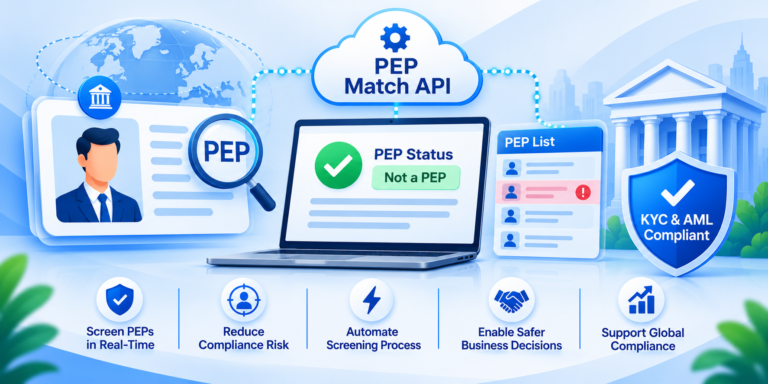
A PEP Match API simplifies the screening process by allowing businesses to submit relevant individual details and receive matching information for further verification.
Typically, the process involves:
- Input Details: Submit information such as full name, date of birth, nationality and address.
- Profile Matching: Compare the submitted details against available PEP records.
- Match Results: Retrieve potential matching profiles and relevant biographical information.
- Confidence Score: Review match confidence to support the assessment of possible matches.
- Further Verification: Examine the results and conduct additional checks before making a compliance decision.
This approach helps organisations make PEP screening a more structured part of their digital onboarding and compliance workflows.
Key Benefits of PEP Match API
- Improved PEP Identification
Identify potential matches against politically exposed person records and strengthen customer screening procedures.
- Multiple Match Results
Access multiple potential matching profiles with relevant biographical details, helping compliance teams conduct more thorough reviews.
- Confidence-Based Screening
Use profile confidence scores to support the evaluation of matching results and distinguish potential matches that require further investigation.
- Global Screening Support
Screen individuals across different countries and jurisdictions, supporting businesses with international customers and cross-border operations.
- Enhanced Due Diligence
Support Enhanced Due Diligence (EDD) by helping organisations identify customers who may require additional scrutiny under applicable compliance policies.
Who Can Benefit from PEP Screening?
A PEP Match API can support several industries:
- Banks and NBFCs: Strengthen customer onboarding, KYC and AML screening.
- Fintech Companies: Incorporate PEP checks into digital customer verification workflows.
- Insurance Companies: Support risk assessment during policyholder onboarding.
- Real Estate Businesses: Screen buyers and investors involved in property transactions.
- Legal and Consulting Firms: Conduct additional checks during client onboarding and due diligence.
Build a Stronger Compliance Framework with PEP Match API
As financial transactions become increasingly digital, businesses need smarter ways to identify potential risks and strengthen customer verification. Integrating a PEP Match API into existing systems can simplify screening workflows, support AML compliance and help compliance teams make more informed decisions.
By combining automated PEP identification, multiple match results and confidence-based screening, businesses can strengthen their due diligence processes while building a more reliable customer onboarding experience.
Look beyond basic identity verification. Make every screening decision more informed with intelligent PEP matching.
FAQs
1. What is a PEP Match API?
A PEP Match API helps businesses screen individual information against available Politically Exposed Person (PEP) records to identify potential matches and support KYC and AML compliance workflows.
2. What is a Politically Exposed Person (PEP)?
A Politically Exposed Person is an individual who holds or has held a prominent public position and may present additional financial crime risks. Certain family members and close associates may also fall within PEP screening requirements under applicable regulations.
3. How does a PEP Match API work?
The API accepts customer information, compares the submitted details against available PEP records, identifies potential matches, and returns the supported matching information in a structured response.
4. Why is PEP screening important for businesses?
PEP screening helps businesses identify potential exposure to financial crime risks, strengthen customer due diligence, and support their KYC and AML compliance processes.
5. Who can use a PEP Match API?
Banks, NBFCs, fintech companies, insurance providers, payment service providers, KYC/KYB providers, and financial compliance teams can use PEP screening solutions.
6. What information is required for PEP screening?
PEP screening generally uses an individual’s name and may use additional information such as date of birth, nationality, or other supported identifiers to improve matching accuracy.
7. Can a PEP Match API identify potential name matches?
Yes. Depending on the API’s matching capabilities, it can identify exact or similar name matches against available PEP records. Additional identifiers can help distinguish between individuals with similar names.
8. Does a PEP match automatically mean someone is involved in financial crime?
No. Being identified as a potential PEP does not mean that an individual has committed financial wrongdoing. A match should be reviewed and assessed through appropriate due diligence procedures.
9. Can PEP screening be integrated into existing KYC systems?
Yes. Businesses can integrate PEP Match APIs into customer onboarding platforms, banking applications, fintech systems, and compliance management solutions through API-based workflows.
10. What should businesses consider when choosing a PEP Match API provider?
Businesses should evaluate database coverage, data freshness, matching accuracy, false-positive handling, API security, response times, scalability, documentation, and technical support.
Conclusion
The PEP Match API plays an important role in strengthening KYC and AML screening by helping businesses identify potential Politically Exposed Person matches through automated verification. By reducing manual screening efforts and supporting structured customer due diligence, organizations can improve risk identification and build more efficient compliance workflows.
With FinAnalyz, businesses can explore API-led verification and screening solutions designed to simplify customer checks, strengthen compliance operations, and support smarter risk management.
