
- October 5, 2026
- Posted by: Finanalyz
- Category: GST Analytics
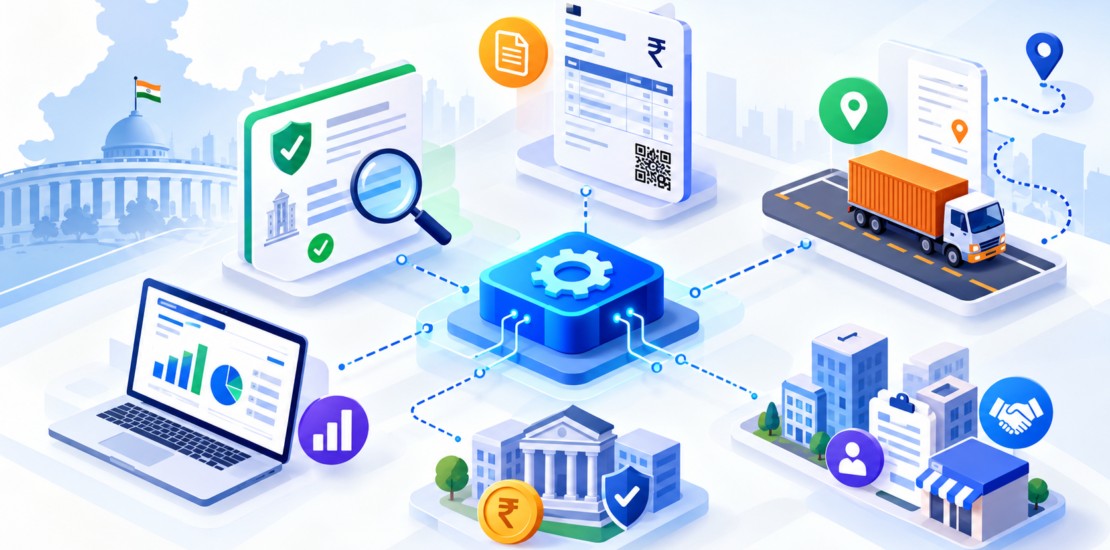
India’s tax ecosystem is rapidly becoming digital, making GST APIs increasingly important for fintech companies, lenders, marketplaces, ERP platforms and businesses.
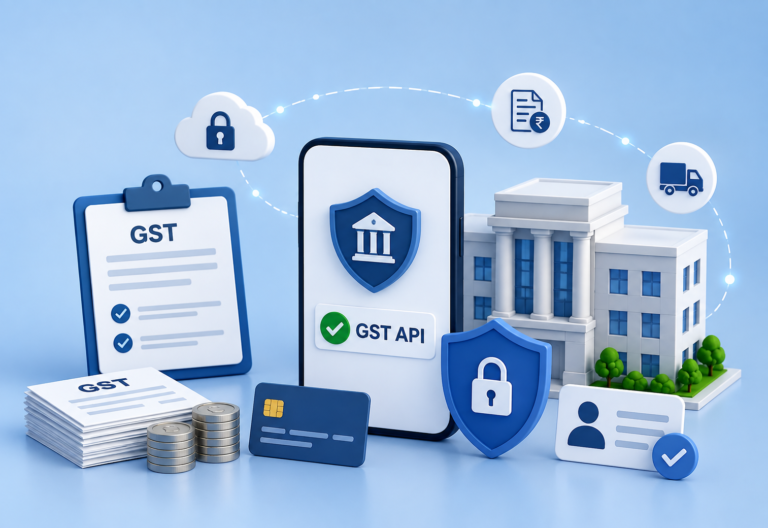
A GST API allows applications to connect with GST-related services and automate processes such as GSTIN verification, GST data retrieval, e-Invoice and E-Way Bill workflows.
Why Are GST APIs Trending?
Manual GST verification and compliance processes can be time-consuming and prone to errors. GST API integration enables businesses to bring these processes directly into their existing applications.
Key use cases include:
- GSTIN Verification API – Validate GST registration and business details.
- E-Invoice API – Integrate invoice-related workflows with business software.
- E-Way Bill API – Automate E-Way Bill generation and related processes.
- GST Data API – Access relevant GST information for business workflows.
- GST Compliance Automation – Reduce repetitive manual compliance tasks.
GST API for Fintech & Lending
GST APIs are becoming particularly useful in digital lending and fintech.
A lender can use GSTIN verification as part of business onboarding and combine GST-related information with other financial and identity data.
Business onboarding → GST verification → Data validation → Financial assessment → Digital underwriting
This can help create a more streamlined digital lending workflow.
GST API for Vendor & Business Verification
Large businesses often work with hundreds of vendors and partners. A GST Verification API can help automate initial checks during onboarding.
Instead of manually checking every GSTIN, businesses can integrate verification directly into their:
ERP → Procurement → Marketplace → Accounting → Vendor Management
systems.
GST API + E-Invoice + E-Way Bill
The bigger trend is the integration of multiple compliance workflows.
GST Verification + E-Invoice + E-Way Bill + ERP + Accounting
can create a connected digital compliance ecosystem, reducing manual data entry and improving operational efficiency.
What Should Businesses Look for in a GST API?
When selecting a GST API provider, consider:
Accuracy | Reliability | Security | Scalability | Documentation | Sandbox Testing | Regulatory Updates
Since GST requirements and API specifications can change, businesses should also ensure their integrations can adapt to GST compliance updates.
The Future of GST APIs
The future of GST API integration is moving beyond simple GSTIN verification. Businesses are increasingly connecting GST verification, e-Invoicing, E-Way Bills, accounting and financial workflows through APIs.
For fintechs, lenders, marketplaces and enterprises, GST APIs can become an important foundation for faster business verification and compliance automation.
Final Takeaway
In 2026, GST APIs are evolving from a verification tool into a broader digital compliance infrastructure.
Businesses that integrate GST Verification APIs, E-Invoice APIs and E-Way Bill APIs can build more connected, automated and scalable workflows.
GST API for Vendor & Business Verification
Large businesses often work with hundreds of vendors and partners. A GST Verification API can help automate initial checks during onboarding.
Instead of manually checking every GSTIN, businesses can integrate verification directly into their:
ERP → Procurement → Marketplace → Accounting → Vendor Management
systems.
GST API + E-Invoice + E-Way Bill
The bigger trend is the integration of multiple compliance workflows.
GST Verification + E-Invoice + E-Way Bill + ERP + Accounting
can create a connected digital compliance ecosystem, reducing manual data entry and improving operational efficiency.
FAQs
1. What is a GST API?
A GST API allows applications to connect with GST-related services and automate processes such as GSTIN verification, e-Invoicing, E-Way Bills, and GST data retrieval.
2. What is a GSTIN Verification API?
A GSTIN Verification API helps businesses validate a GSTIN and retrieve relevant registration details, helping simplify customer and vendor verification.
3. How does an E-Invoice API work?
An E-Invoice API connects business applications with e-Invoicing systems, helping automate invoice-related processes and reduce manual data entry.
4. What is an E-Way Bill API?
An E-Way Bill API helps businesses automate E-Way Bill-related processes for the movement of goods, reducing manual effort and improving operational efficiency.
5. Who can use GST APIs?
GST APIs can be useful for fintech companies, lenders, marketplaces, ERP platforms, accounting systems, logistics companies, and enterprises.
6. How can GST APIs help fintech and lending companies?
Fintech and lending companies can use GST verification and related GST data as part of business onboarding, validation, and digital underwriting workflows.
7. What should businesses consider when selecting a GST API provider?
Businesses should evaluate accuracy, reliability, security, scalability, API documentation, sandbox availability, support, and the provider’s ability to adapt to regulatory changes.
8. Is GST API integration secure?
Security depends on the API provider and implementation. Businesses should look for secure authentication, encrypted communication, access controls, data protection, and compliance with applicable requirements.
Conclusion
GST APIs are becoming an important part of India’s digital compliance ecosystem. They help businesses automate GSTIN verification, E-Invoicing, E-Way Bills, and GST-related workflows, reducing manual effort and improving operational efficiency.
For fintechs, lenders, marketplaces, ERP platforms, and enterprises, GST API integration can enable faster verification, better data accuracy, and more scalable compliance processes.
As GST-related digital services continue to evolve, businesses can benefit from secure, reliable, and flexible GST API integrations that support changing compliance requirements.
