
- June 15, 2026
- Posted by: Finanalyz
- Category: Digital Lending
As businesses increasingly rely on digital technologies, cloud platforms, and online transactions, the risk of cyber threats continues to grow. Cyberattacks can lead to financial losses, data breaches, operational disruptions, and reputational damage. To combat these risks, organizations must implement robust cybersecurity solutions that safeguard their systems, networks, applications, and sensitive information.
Cybersecurity is no longer just an IT concern, it is a critical business priority that helps organizations maintain trust, ensure compliance, and protect valuable digital assets.
Table of contents:
What Are Cybersecurity Solutions?
Why Cybersecurity Is Important
Key Cybersecurity Solutions
Common Cyber Threats Businesses Face
Benefits of Implementing Cybersecurity Solutions
The Future of Cybersecurity
FAQs
Conclusion
What Are Cybersecurity Solutions?
Cybersecurity solutions are technologies, processes, and practices designed to protect an organization’s digital infrastructure from unauthorized access, cyberattacks, malware, ransomware, phishing attacks, and data breaches.
These solutions work together to identify threats, prevent attacks, detect suspicious activities, and respond quickly to security incidents.
Why Cybersecurity Is Important
Modern organizations handle vast amounts of sensitive information, including customer data, financial records, intellectual property, and business-critical systems. A single security breach can result in significant financial and operational consequences.
Effective cybersecurity helps organizations:
- Protect sensitive business data and customer information
- Prevent unauthorized access to systems
- Reduce the risk of financial losses
- Ensure regulatory compliance
- Maintain business continuity
- Build customer trust and confidence
Key Cybersecurity Solutions
Network Security
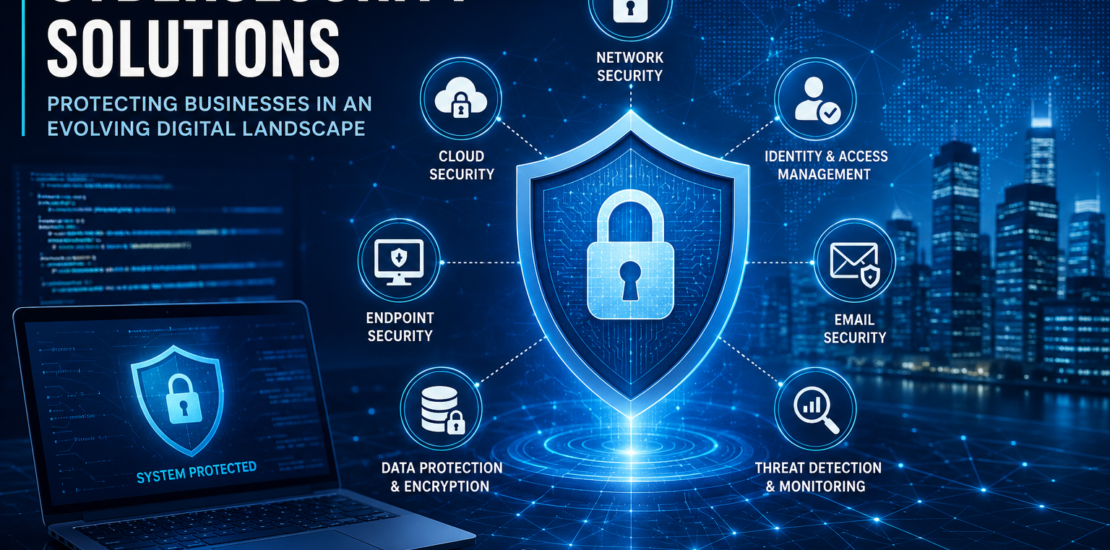
Network security solutions protect an organization’s network infrastructure from unauthorized access, malware, and cyber threats. Firewalls, intrusion detection systems, and network monitoring tools help secure data as it moves across networks.
Endpoint Security
With employees accessing business systems from laptops, smartphones, and remote devices, endpoint security has become essential. These solutions protect devices against malware, ransomware, and unauthorized access.
Cloud Security
As organizations move workloads to the cloud, cloud security solutions help safeguard cloud applications, data storage, and cloud-based infrastructure from cyber threats and misconfigurations.
Identity and Access Management (IAM)
Identity and Access Management (IAM) solutions ensure that only authorized users can access specific systems and resources. Features such as Multi Factor Authentication (MFA), role-based access controls, and single sign on strengthen security while improving user experience.
Data Protection and Encryption
Encryption solutions protect sensitive information both at rest and in transit. Data protection tools help prevent data leaks, unauthorized sharing, and accidental exposure of confidential information.
Email Security
Email security solutions help block phishing emails, malicious attachments, spam, and fraudulent communications, one of the most common sources of cyberattacks.
Security Monitoring and Threat Detection
Modern cybersecurity platforms use real-time monitoring, Artificial Intelligence (AI), and advanced analytics to identify suspicious activities and potential threats before they cause significant damage.
Common Cyber Threats Businesses Face
Cybercriminals use deceptive emails and messages to trick users into revealing passwords, financial information, or confidential data.
Ransomware
Ransomware attacks encrypt business data and demand payment in exchange for restoring access, often causing severe operational disruptions.
Malware
Malware can steal data, damage systems, and create vulnerabilities that attackers exploit.
Insider Threats
Security risks can originate from employees, contractors, or partners who intentionally or accidentally compromise sensitive information.
Data Breaches
Data breaches involving confidential business or customer information can result in legal, financial, and reputational consequences.
Benefits of Implementing Cybersecurity Solutions
Investing in cybersecurity solutions provides several strategic advantages:
- Reduced risk of cyberattacks and data breaches
- Enhanced protection of sensitive information
- Improved regulatory compliance
- Greater operational resilience
- Increased customer trust
- Faster incident detection and response
- Protection of brand reputation
Best Practices for Strengthening Cybersecurity
Organizations should adopt a proactive cybersecurity strategy by:
- Conducting regular security assessments
- Implementing Multi Factor Authentication (MFA)
- Keeping software and systems updated
- Providing cybersecurity awareness training
- Encrypting sensitive data
- Monitoring networks continuously
- Establishing incident response plans
- Performing regular data backups
The Future of Cybersecurity
As cyber threats become more sophisticated, cybersecurity solutions are evolving to incorporate Artificial Intelligence (AI), Machine Learning (ML), automation, and advanced threat intelligence. Organizations are increasingly adopting Zero Trust Security models that verify every user and device before granting access.
Future cybersecurity strategies will focus on proactive threat prevention, continuous monitoring, and intelligent security automation to stay ahead of emerging risks.
FAQs
1. What are cybersecurity solutions and why are they important?
Cybersecurity solutions are technologies and security practices designed to protect networks, systems, applications, and data from cyber threats. They help organizations prevent attacks, maintain compliance, and ensure business continuity.
2. How do cybersecurity solutions protect businesses from cyberattacks?
Cybersecurity solutions use firewalls, threat detection systems, endpoint protection, encryption, and real-time monitoring to identify, prevent, and respond to cyber threats before they can cause significant damage.
3. What are the most common cyber threats faced by businesses?
Businesses commonly face phishing attacks, ransomware, malware infections, insider threats, data breaches, and unauthorized access attempts that can compromise sensitive information and disrupt operations.
4. Why is Multi-Factor Authentication (MFA) important for cybersecurity?
Multi-Factor Authentication (MFA) adds an extra layer of security by requiring users to verify their identity through multiple methods, significantly reducing the risk of unauthorized access and account compromise.
5. How can businesses improve their cybersecurity posture?
Organizations can strengthen cybersecurity by implementing MFA, conducting regular security assessments, encrypting sensitive data, training employees on security awareness, monitoring systems continuously, and maintaining updated software and security controls.
Conclusion
Cybersecurity solutions are essential for protecting businesses in today’s digital first environment. From network security and endpoint protection to cloud security and threat monitoring, a comprehensive cybersecurity strategy helps organizations safeguard their assets, maintain compliance, and ensure business continuity.
