
- April 26, 2026
- Posted by: Finanalyz
- Category: GST Analytics
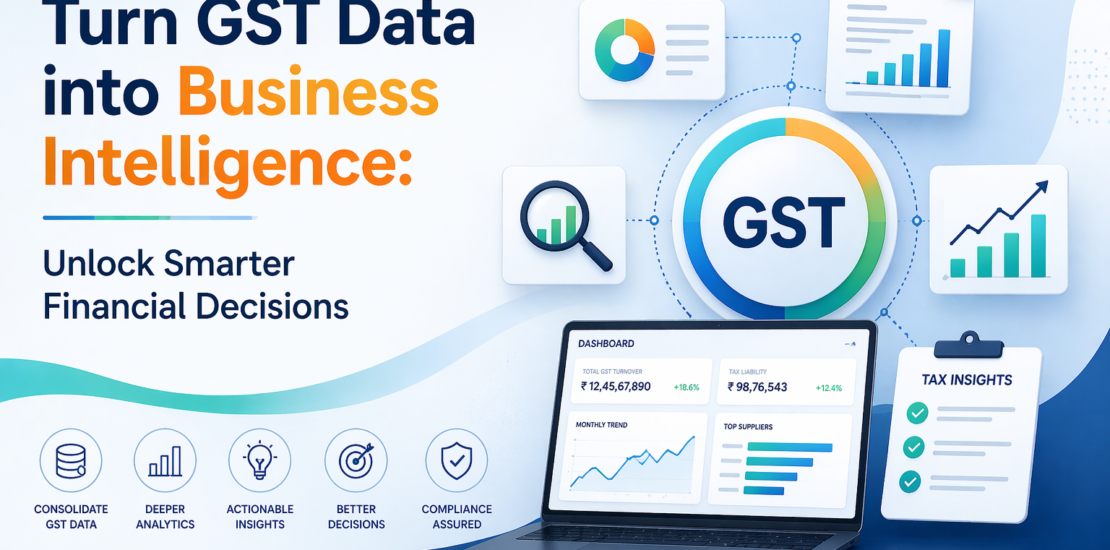
One of the most powerful yet underutilized sources of business intelligence in India is GST data. While most organizations view GST information primarily as a compliance requirement, modern GST Analytics enables businesses to extract valuable insights that support growth, improve compliance, and strengthen financial decision-making.
By transforming raw GST records into actionable intelligence, businesses can gain a deeper understanding of revenue patterns, operational performance, financial health, and creditworthiness.
What is GST Analytics?
GST Analytics refers to the process of analyzing GST data to extract meaningful insights about a business’s financial health. It helps organizations understand revenue patterns, tax compliance status, and operational efficiency in real time.
By leveraging GST insights for business, companies can move beyond compliance and turn data into a strategic competitive advantage enabling smarter decisions at every level of the organization.
Why GST Analytics Matters
Using GST Analytics, businesses can unlock powerful benefits that go far beyond basic compliance reporting:
Real-Time Financial Insights
Gain a clear view of business performance with financial analytics, enabling faster and smarter decisions
Faster Loan Approvals
Lenders rely on GST data analysis to evaluate creditworthiness, helping businesses secure loans quickly
Early Risk & Fraud Detection
Identify discrepancies and anomalies using GST insights, reducing risks and ensuring compliance
Key Benefits of GST Analytics
Implementing GST Analytics delivers measurable value across lending, compliance, growth planning, and business operations.
Smarter Credit Decisioning
Financial institutions can use GST data to evaluate borrower financial health, improving credit assessment accuracy and reducing lending risk.
Better Tax Compliance
Detect reporting errors early and ensure continuous compliance with evolving tax regulations.
Data-Driven Growth Strategy
Use GST insights to identify revenue trends, growth opportunities, and operational improvements that support business expansion.
Automated Reconciliation and Reporting
Automate reporting processes, reduce manual effort, and improve accuracy across financial operations.
How Businesses Can Leverage GST Analytics
To maximize the value of GST Analytics, businesses should build a structured approach that integrates data, systems, and workflows:
- Use advanced GST analytics tools for real-time insights into revenue and compliance
- Integrate GST data with existing financial systems for a unified view of business health
- Monitor compliance continuously using GST reporting tools to prevent issues before they arise
- Leverage financial analytics solutions built for India for better, localized decision-making
When GST data is connected across systems, it becomes far more than a compliance artifact it becomes a live dashboard of business performance.

The Future of GST Analytics
With advancements in AI and machine learning, GST Analytics is evolving rapidly. The next generation of tools will enable businesses to:
- Predict revenue trends and cash flow gaps using behavioral and historical GST patterns
- Automate compliance filing and reconciliation end-to-end with zero manual intervention
- Receive proactive alerts for anomalies, mismatches, and potential fraud in real time
Businesses Adopting GST Analytics Today Will Gain:
By combining automation, AI intelligence, and real-time GST data, forward-thinking organizations will secure a durable competitive advantage in efficiency and growth.
FAQs
GST Analytics is the process of analyzing GST-related financial data to generate insights about business performance, compliance status, revenue trends, and financial health. It helps organizations make smarter and faster business decisions.
How does GST Analytics help financial institutions?
Financial institutions use GST Analytics to evaluate borrower credibility, assess business cash flow, improve credit decisioning, and reduce lending risks through data-driven financial analysis.
Can GST Analytics improve compliance and fraud detection?
Yes. GST Analytics tools can automatically identify discrepancies, mismatches, unusual transaction patterns, and compliance risks in real time, helping businesses prevent fraud and avoid regulatory penalties.
Conclusion
GST Analytics is no longer just about compliance it’s a powerful driver of business intelligence and strategic growth. By using GST insights, companies can reduce risks, improve financial performance, and unlock new opportunities that were previously hidden in plain sight.
The businesses that act on their GST data today will be the ones defining smarter, faster, and more resilient enterprises tomorrow
